

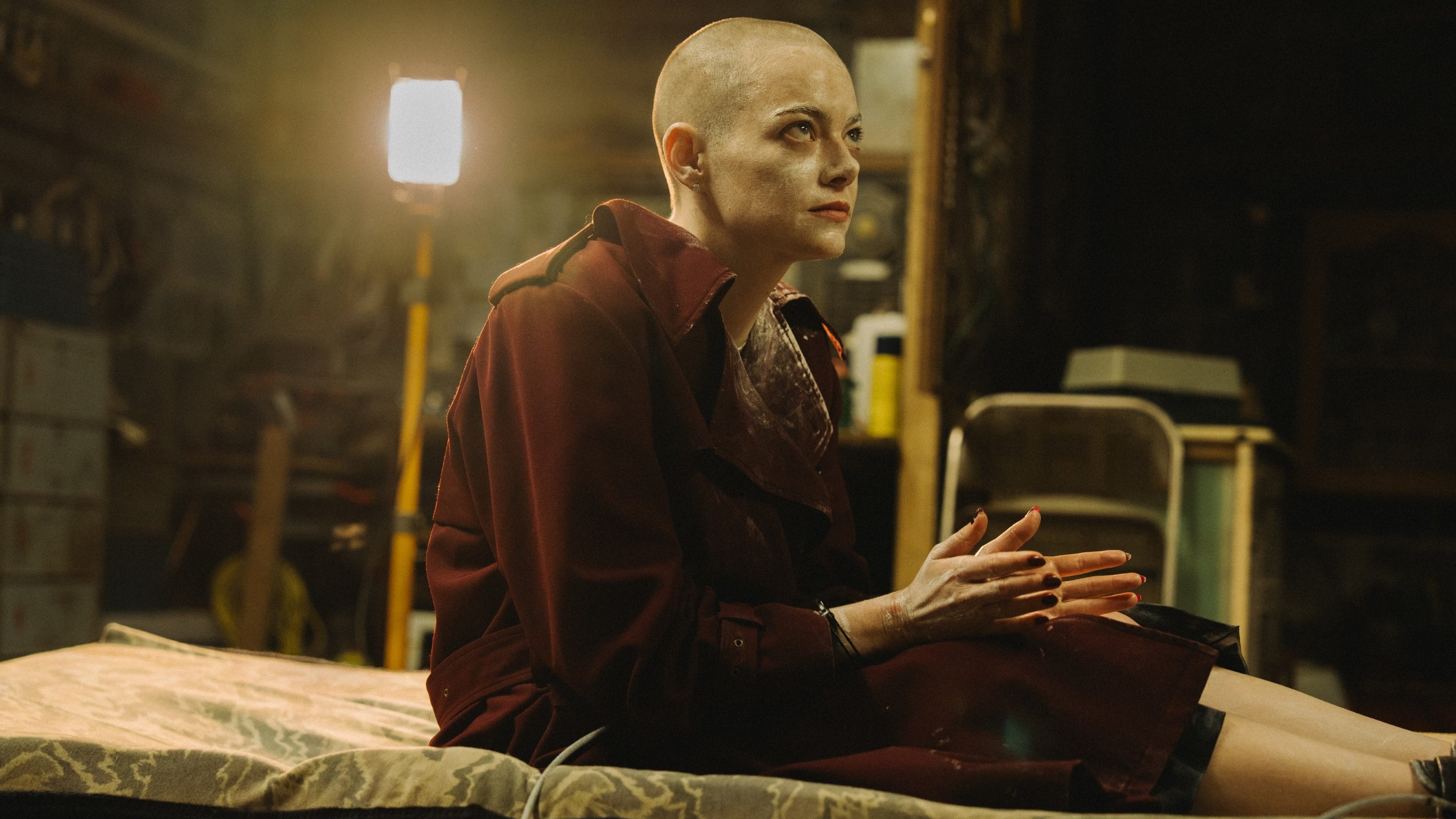
American cinema has long flip-flopped between revealing the world as it is and the world as it wants it to be.
Certain eras retreat into wish-fulfilment. The Reaganite 1980s unleashed a wave of ‘roided-up bodybuilders on enemies home and abroad. America was back, baby: bigger, meaner, and manlier than ever. Following the War on Terror, studios fed us morally straightforward fantasies of spandex-wearing heroes solving our problems with a wink, a quip and a well-timed punch.
Other eras are more cold-eyed. Historically, when cinema has been most culturally virile, it has produced tight, thematically cohesive, fiercely contemporary clusters that diagnose the anxieties of the current moment.
In the aftermath of Watergate, the New Hollywood spat out tales of angry, suspicious men being crushed by vast conspiratorial systems, whether the government, the mob, or the family (The Parallax View, All the President’s Men, The Conversation, Chinatown, Three Days of the Condor). The late 1990s introduced a series of passive, emasculated office drones flailing against the crushing weight of corporate mediocrity (Fight Club, Being John Malkovich, American Beauty, The Matrix, Office Space).
This push-and-pull between confrontation and retreat is a feature of cinema, not a bug. Movies are made of flesh and blood. Behind every film are dozens, hundreds, thousands of imperfect humans, each bringing their own hopes, fears, and preoccupations. They’re made by institutions, too: companies, nonprofits, and governments with mandates to fill, stakeholders to satisfy, and markets to please. Every movie reveals something about the world it was made in.
I am resolutely not one of the “cinema is dying” crowd. There have been hundreds of incredible, important movies in my adult life. I could solely watch 2010-2025 cinema for the next 30 years and still be finding cool new stuff in my sixties.
But for all the individual high points of the last 15 years, the medium as a whole has been losing contact with reality. At its best, cinema functions as a cultural antibody: a mirror to, rather than an escape from, society at large. In recent years, the dominant preoccupation has instead been wish-fulfilment, expressed through superhero fantasies, hermetically sealed character studies, and the retreat of auteurs to period pieces (no, smartphones aren’t an excuse).
There are a couple of obvious exceptions, but neither of them quite scratches my historical itch.
First, “Eat the Rich” (Parasite, The Menu, Triangle of Sadness, Glass Onion, Ready or Not). This is a cluster of thematically aligned films, yes. But it reads as escapism. "Rich People Are Bad, So Let’s Laugh At/Punish/Expose Them” isn’t a provocative thesis. Eat the Rich is to the financial crisis as superheroes are to the War on Terror: a retreat to moral simplicity and wish fulfilment in the face of forces we don’t understand.
Second, Elevated Horror. On the “world as it is vs world as you want it to be” scale, Elevated Horror sits firmly in the former’s camp (unless the world you want involves being possessed by a trickster demon). But though the trauma-coded language of Elevated Horror was new, its thematic preoccupations - psychological implosion, the sins of the father, grief - weren’t. With some exceptions (e.g. Get Out), these movies were more attempts to reflect eternal human truths than cohesive statements on the cultural moment.
Which brings us to 2025. When historians look back at 1970s cinema, they see a society processing the collective trauma of Watergate and Vietnam. When they look at 1999, they see one grappling with corporate alienation and the spiritual exhaustion of office life. In 20 years, when they look back at Eddington, Bugonia, One Battle After Another, House of Dynamite, Weapons, Cloud, It Was Just An Accident, No Other Choice, and 2024’s Civil War, they’ll see a culture grappling with the post-social media, post-COVID, post-AI collapse of shared reality.
Are you an American? Are you an alien? Are you my father? Were you my torturer? Do I have a job? Why do you hate me? Is there a nuke? Are you my enemy? Is COVID real?
These are the questions haunting the 2025 canon. Consensus truth has dissolved. Trust in institutions has collapsed. Conspiratorial thinking reigns.
These are films soaked in disorientation and anxiety; in a sense of existential confusion about a world changing in ways their characters don’t understand. Importantly, they are all set in or around the present day. They even feature smartphones and social media!
For the first time in years, cinema is behaving like a cultural antibody again. Yes, it’s uncomfortable, but so was Fight Club and The Conversation. Perversely, I read these movies’ cynicism as optimism. What is art for if not to help us process times of immense change? That movies still can be an outlet for our hopes and fears is a sign that the medium still has a role in our future.
As to where that immense change leads? I’ll leave that one to the historians.
2025 was stacked, although as other commenters have noted, Marty Supreme belongs in there, and I also enjoyed Nouvelle Vague.
I'd also throw in 2019 as a pretty stacked year as well: Once Upon a Time in Hollywood, Uncut Gems, The Irishmen, Portrait of a Lady on Fire, Parasite, Little Women, A Hidden Life, The Souvenir, Pain and Glory, Ad Astra.
Agree 100%. I'd throw Marty Supreme into that list as a film using the past to discuss present themes of American myth vs reality. I also think there's a real Romantic sensibility to almost all of these films. A rejection of systems in favor of people and human connection. All seem to be grappling with "what happens at the end of something".