
Stop Moaning About Video Game Movies
Why the new era of studio filmmaking might be better than the last
The video game era is here. All hail the video game era.
Don’t just take my word for it. Here’s newly minted Filmstacker Sean Fennessey:
Speaking of video games, that was my overwhelming takeaway from CinemaCon—they’re not only the new superhero for studios, they’re the new Everything […] This is not only the vanguard of studio filmmaking, it’s easily the most untapped resource given the 40-plus-year history of gaming.
Sounds grim, right? Just as superheroes hit the limits of their powers, studios find another source of IP to shove through the sausage factory. There is the unmistakable stench of butts-in-seats cynicism to the whole affair. One Intellectual Property After Another.
It’s less bad than you think. Actually, that’s a hedge. I’ll rephrase. It’s good.
Studios have always followed the money. Westerns, musicals, slashers, historical epics, young adult dystopias: Hollywood history is littered with the bones of genres once enthusiastically embraced by the industry’s powerbrokers.
Today, the pivot revolves around IP and brand identity rather than story and genre. Hence the cynicism. But that’s the world we’re stuck with. Rather than comparing this latest development to a mythical ideal of artistically motivated studio filmmaking, isn’t it better to compare it to, I don’t know, the world we’ve actually been living in for the last 10+ years?
If I had to choose between a world where superheroes are the “vanguard of studio filmmaking” and a world where video game movies fulfil the same function, I’d choose the latter.
Superhero movies tend to be narratively constrained. There is someone out to achieve something nefarious, and someone out to stop them. There are fights. There are origin stories. Occasionally, the film may set out to subvert expectations, usually by having its hero act in a villainous way or do something absolutely mental like SWEAR AND HAVE SEX. There’s scope for tonal variety, but, in the grand scheme of things, the possibility space is pretty limited.
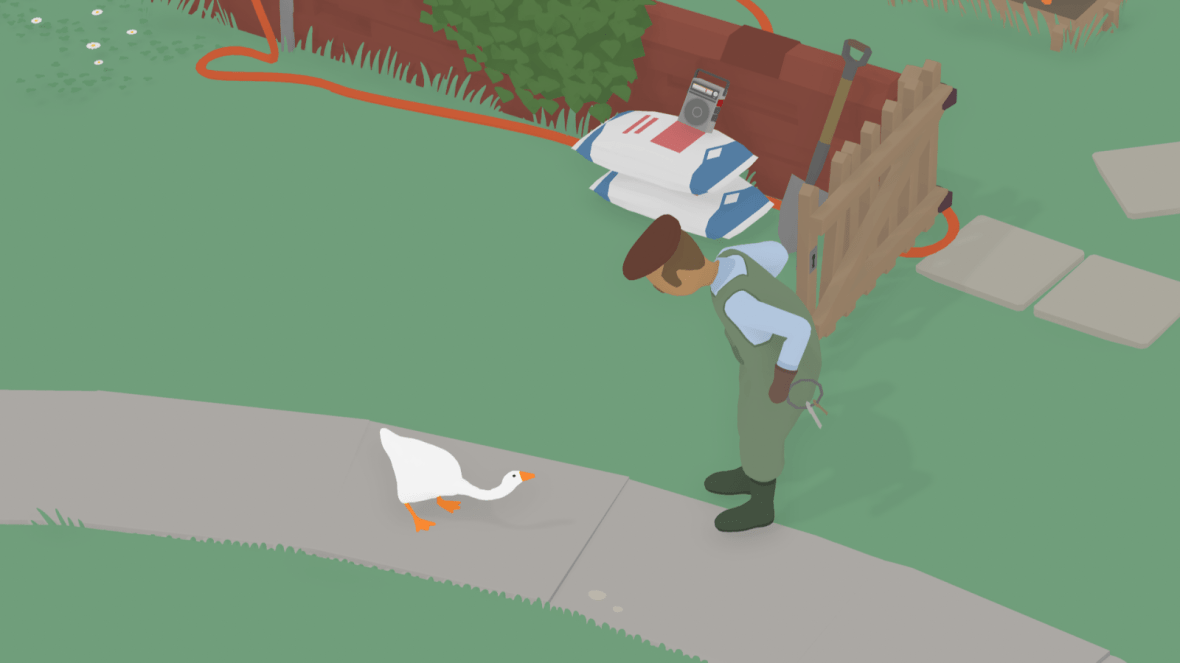
Video game movies aren’t constrained in this way, because the source material isn’t. An Untitled Goose Game movie will have different thematic preoccupations to Bioshock. There is next-to-no common DNA between Portal and The Sims.
In the video game era, big-budget studio filmmaking has the potential to be way more diverse than the preceding era in terms of tone, genre and theme (I’m told that, in the spiritual wasteland otherwise known as “television,” we already have a couple of artistically bold video game adaptations in The Last of Us and Fallout).
Of course, potential is not the same as reality. To date, video game movies have largely been slop. If the video game era is the Super Mario Galaxy era then you have my permission to moan.
But slop will always find a way. I’m more interested in how the talented filmmakers who want studio resources can get them. For years, indie up-and-comers and established names looking for a fun paycheck had to use superhero films as their golden ticket to the big leagues (just ask Taika Waititi, Shane Black, Sam Raimi, Patty Jenkins and Jon Watts). No longer! Now, Alex Garland can summon a $100m budget for a dark fantasy epic. Zach Cregger can secure $80m to make ‘Fury Road with zombies.’
There are some auteurs I don’t want touching this stuff. If Paul Thomas Anderson announces he is making an Angry Birds Movie, I’ll have a couple of concerns. But if, hypothetically, glomming onto Kingdom Come Deliverance would let someone like Oliver Laxe make a gnarly medieval action flick, great! If JT Molner wanted to leverage Ghost of Tsushima to make a samurai revenge picture, have at it!
Video game stories, with a few notable exceptions, are rarely treated with the reverence that superhero canon is. That makes for a much bigger creative sandbox. The best case scenario for the video game era is that we’ll see a wave of savvy filmmakers securing studio backing with recognisable IP and using it to take some wild swings. Rather than moaning, this is the future we should be advocating for.
Rough Cuts is a home for the ambitious cinephile. Join below for deeply researched writing on cinema.
As a thank you to early supporters, I’m also offering 20% off FOREVER to the first 50 subscribers to the annual plan:


