

The week began with a decision: a restoration of Andrei Tarkovsky’s The Sacrifice or a packed screening of Destin Daniel Cretton’s Spider-Man: Brand New Day. I dragged myself to the former. Somewhat unwillingly, it has to be said. It was a Monday evening, and I had little appetite for a challenge. I soon changed my mind.
Alexander is a man of words, prone to despairingly cerebral monologues that are patiently tolerated by his young son, temporarily rendered mute by a throat operation. He lives in a beautiful house on a beautiful island, unbothered by civilisation and politics and God. It is his birthday - some inconsequential number between 50 and 70 - and he is having an odd little party attended by his resentful wife, a philosophical postman and a suave doctor who may be his wife’s lover.
Civilisation, politics and God. Tonight, these three horsemen return, heralded by the roar of fighter jets and a television broadcast announcing an impending nuclear holocaust. Confronted by existential desolation, Alexander turns to action, praying for salvation and offering to give up everything he loves in return. When morning comes, he must live up to his side of the bargain.
I recently collapsed in a cinema’s bathroom. It was 11.30 at night, and I had just seen David Lowery’s Mother Mary. I was viscerally repelled by that film’s sanctimonious drudgery. Perhaps that’s why I fainted. I spent the night awake in a hospital waiting room, until being discharged at 10am. I tell this story because The Sacrifice, in its conventional three-act structure, achieves the uncanny sensation of a sleepless night better than any film I’ve seen.
Before nightfall, the film accumulates detail. We encounter Alexander’s spiritual isolation; his nihilism, which is masked as intellectualism and cushioned by material comfort. Oddly for a director as visually able as Tarkovsky, key information is delivered via lengthy monologues. Unfurled via long takes, this table-setting becomes confrontationally theatrical at points, particularly when we leave the shimmering natural beauty of the island’s exteriors (shot by Bergman regular Sven Nykvist) for the house’s cloistered interior.
It is the second act when Tarkovsky’s carefully laid dominoes begin to topple. The scream of the fighter jets is a great piece of sound design: the film, so quiet until this moment, roars; the house, so still until now, shakes. Alexander’s stupor - and ours - is broken. Night has fallen.
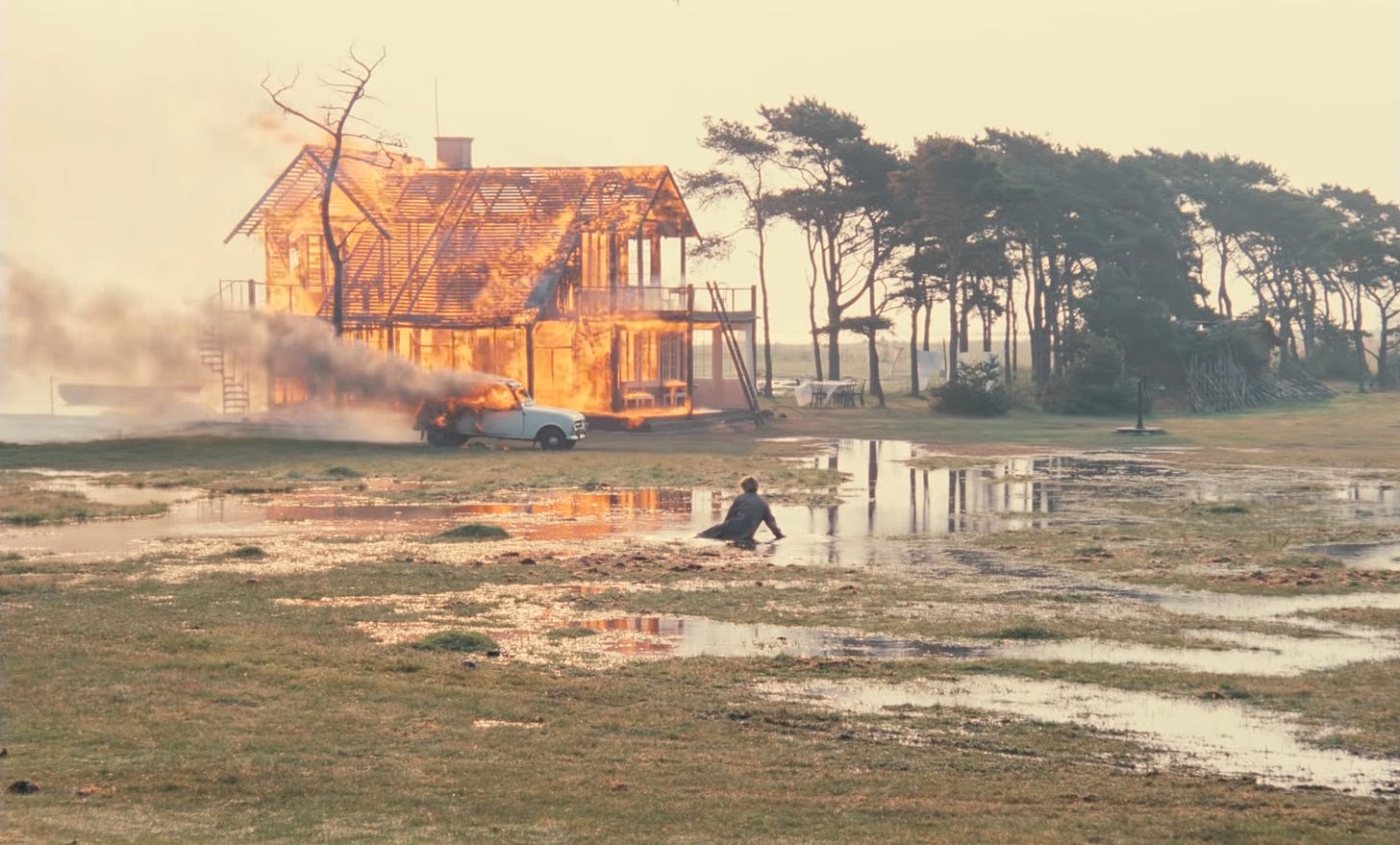
The overwhelming dread of these middle sections affected me deeply. It is rare to see a film embrace hopelessness so wholeheartedly. Melancholy is not the right way to describe it, for this implies a certain midnight-blue-wistfulness. The despair that falls upon the characters is black. The film literally loses colour: gone are the vivid greens and deep browns of the first act, replaced by a sickly, desaturated palette.
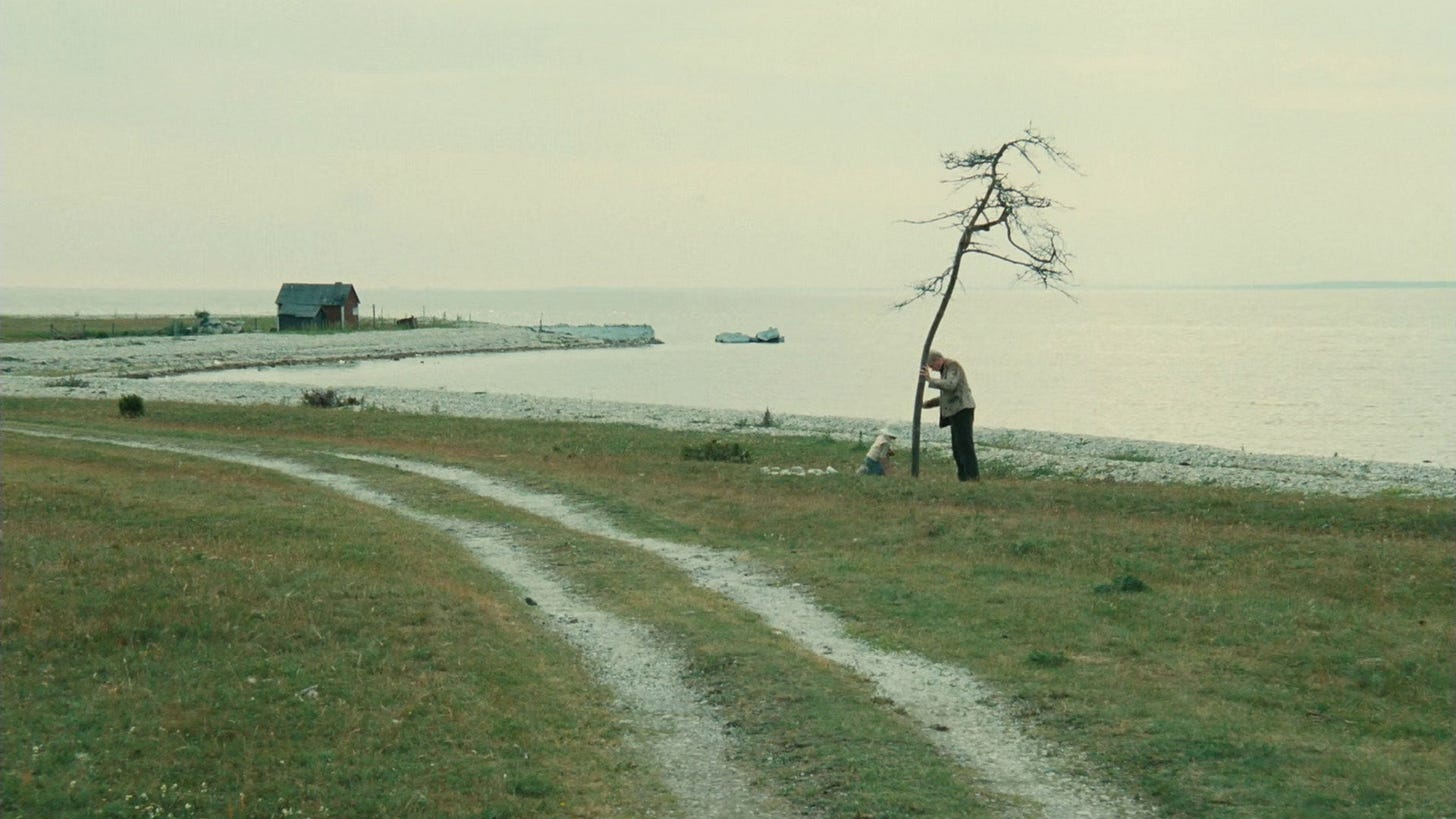
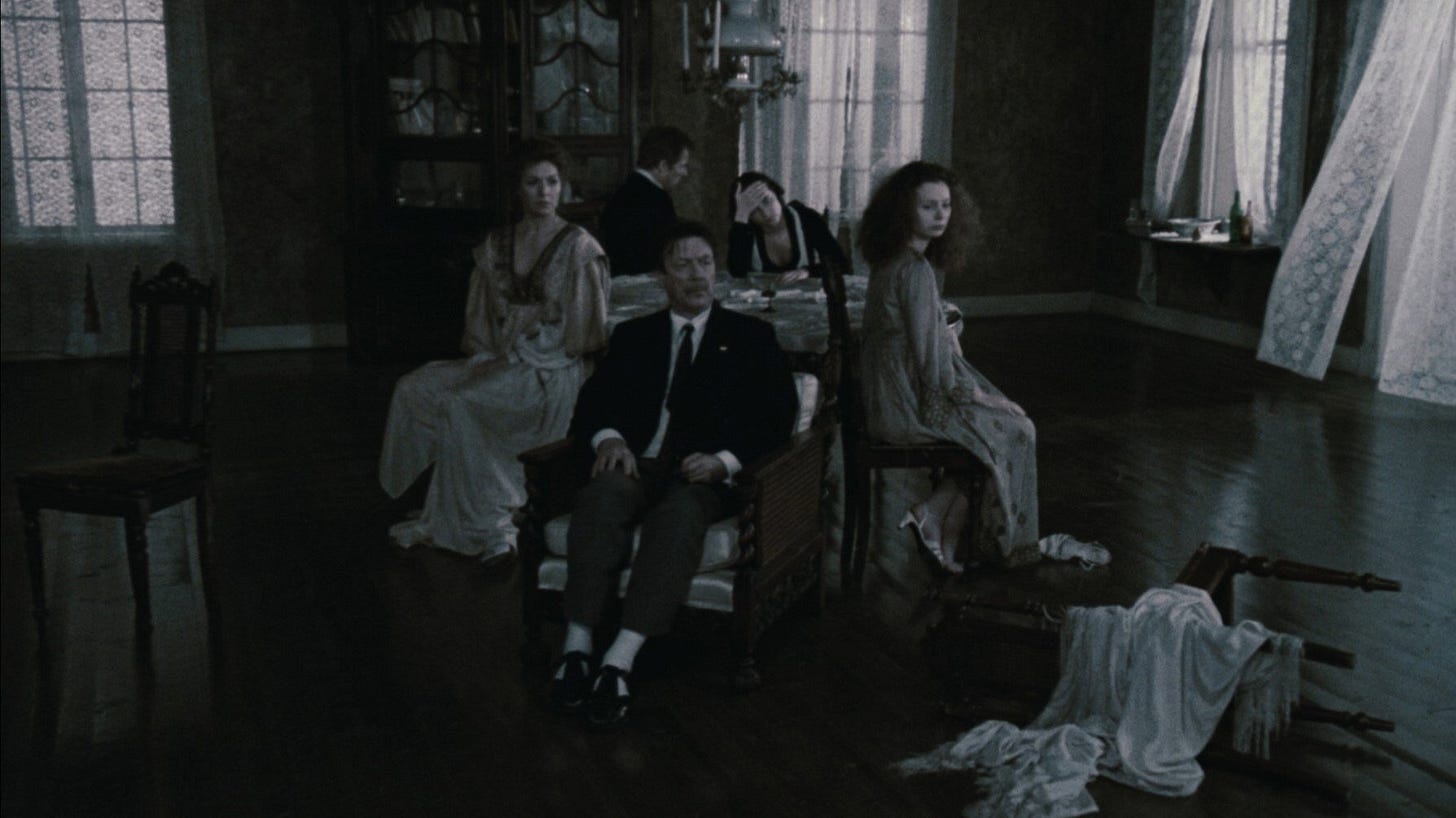
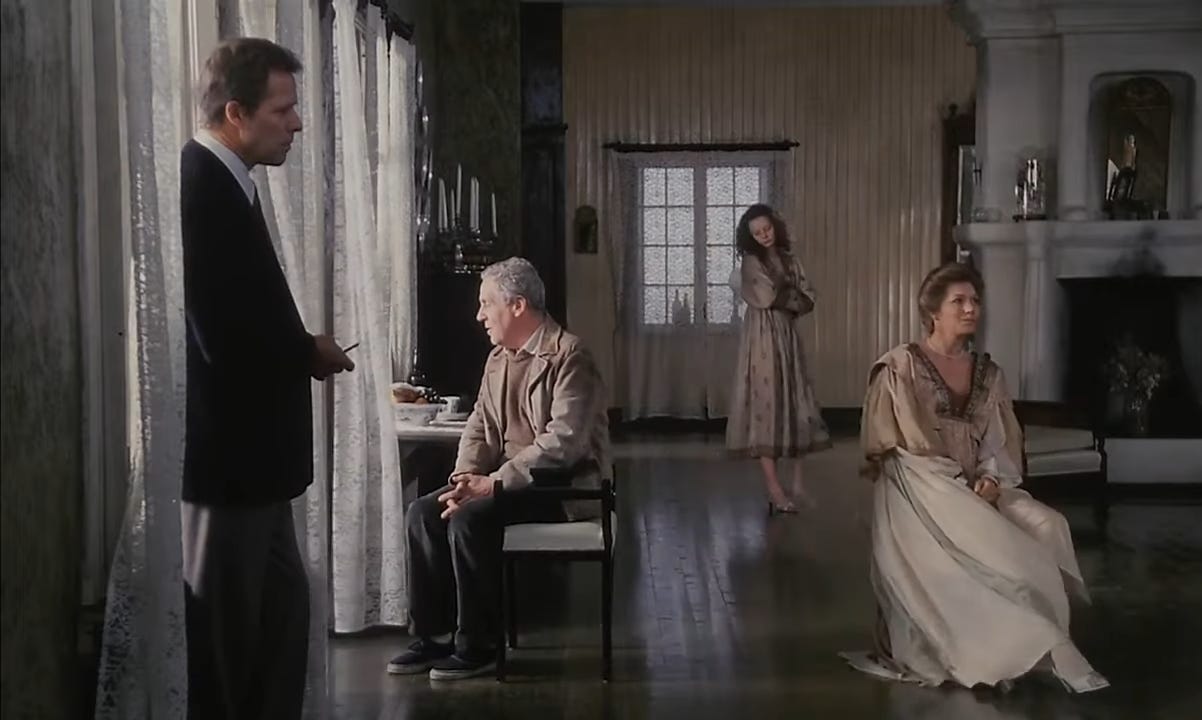
Tarkovsky made this film in Sweden, with many of Bergman’s regular collaborators. Like much of Bergman’s work, the film is rooted in the German tradition of Kammerspiel - chamber play - using theatrical staging and domestic minutiae to psychologically pressure-cook its characters. Unlike Bergman, though, Tarkovsky uses close-ups sparingly. Instead, he stages his action from a cold distance, allowing actors to move in and out the frame. We are denied the relief of a cut; the humanity of a close-up.
The dread is total. Alexander’s wife, whose viciousness imbalances the film, has a panic attack. Now, the first act’s quietness, and Tarkovsky’s merciless reluctance to cut, take effect. She screams, and begs, and screams. We are desperate for her to be put out of her misery, but also out of ours. She cannot escape, and neither can we. When the doctor injects her, it is a relief. Faced with such despair, we long for the tranquilliser.
Alexander’s response is quieter. He prays to the God he claims to not believe in. Now the film enters the realm of magical realism, with a pair of possibly supernatural encounters (whether Christian or Pagan, Tarkovsky leaves open to interpretation).
And then it is morning. Colour has returned, and the hallucinatory events of the night before already feel like a dream. This is what a sleepless night feels like.
But Alexander has a bargain to keep. Now the film’s tantric quality reveals itself. There have been pleasures of the mind aplenty, but pleasures of the body - the primal viscera of cinema - have been largely withheld. The release, when it comes, is hellishly, dementedly ecstatic.
This was Tarkovsky’s final film. It is dedicated to his son; echoed in the film’s final shot, which is stubbornly hopeful. Tarkovsky called the film a parable, but it is not nearly so didactic as that. The true nature of Alexander’s sacrifice - if indeed he made one at all - is left open.
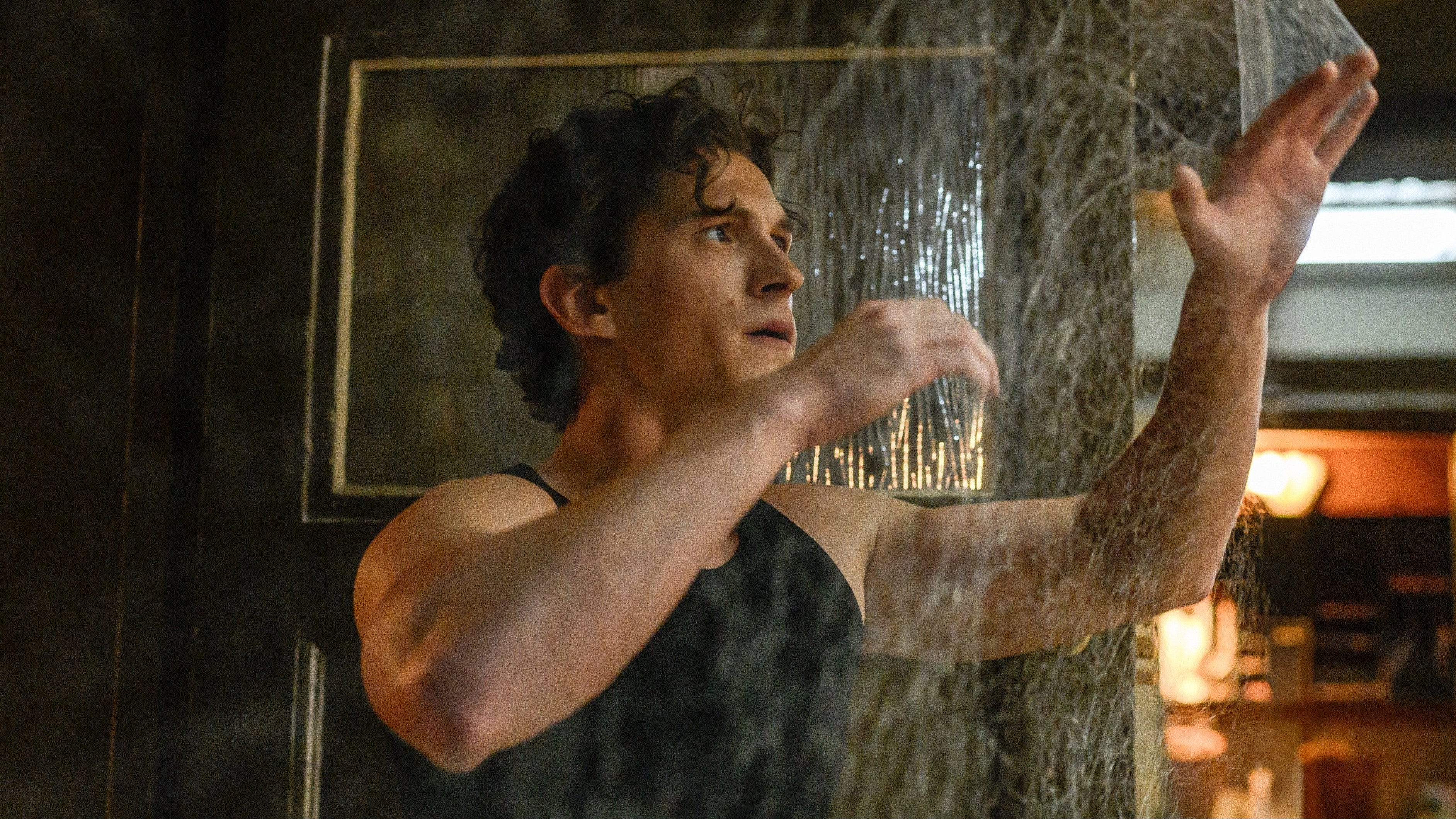
The nuclear apocalypse that hangs so heavy over The Sacrifice is small-beer by Spider-Man’s stakes (or “small potato” as one cameo character declares early in the film). It is precisely this stake-inflation that has plagued recent instalments of the MCU. If anything can happen, and unhappen, anywhere in the multiverse, why should we care about whatever the conflict du jour is?
It is admirable, then, that Spider-Man: Brand New Day puts to the side the multiversal shenanigans of recent entries and focuses on the rather more parochial concerns of a talented young man reckoning with a non-existent social life.
If The Sacrifice is a film about the desperate horror of impending death, Spider-Man: Brand New Day is about the grim reality of a lonely life, and the film is at its best when it is leaning into its everyday stakes, brought to life via some real on screen chemistry between Tom Holland and Zendaya.
It is a bluntly effective film; less frictionless than Jon Watts’ preceding trilogy and quite charming in its messiness. It delivers what critics of recent instalments of the MCU have been calling for: grounded storytelling and practical(ish) craft, while its obligatory wider-universe cameos at least read as thematically cohesive rather than nakedly cynical. But there is a lifelessness to proceedings: its beats are predictable, its emotional arcs telegraphed well in advance. And the central metaphor falls flat. This is a film about puberty (Peter is losing control of his body and emotions), but we have already spent three films (and an entertaining opening montage) watching him become a man.
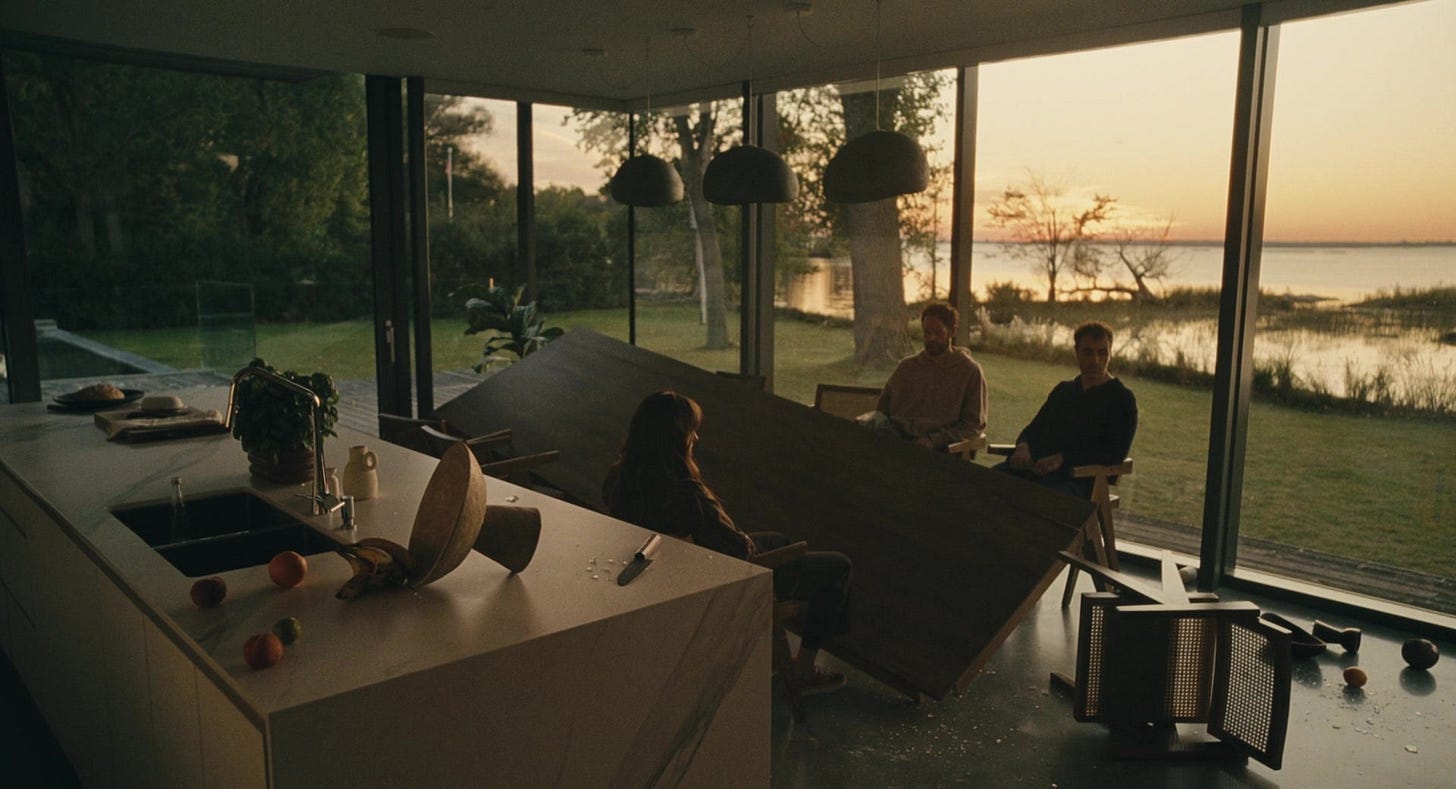
Lifeless is not a word you can throw at Splitsville, a 2025 romantic comedy about two intertwined couples in purportedly open relationships (Dakota Johnson, Michael Angelo Covino, Adria Arjona and Kyle Marvin).
There are faults common to the genre. The middle section meanders, a swerve into earnest melodrama feels unearned, and decision-making is often plot rather than character driven. But I didn’t particularly care. It’s too damn funny (and well-made) for quibbling.
Though a post-80s romantic comedy in structure, Splitsville differs in tone to Nora Ephron or Nancy Meyers; more farcical and slapstick. More physical, too, with one glorious extended fight sequence worthy of Buster Keaton. Farce only works when it’s delivered in earnest, and some actual filmmaking gives heft to the film’s antic sensibilities: it was shot in 35mm in real locations, with attention paid to out-there concepts like framing and composition. Some of the takes even last a minute-plus: Tarkovsky-esque in the current climate. It is an easy watch, but it’s not weightless.
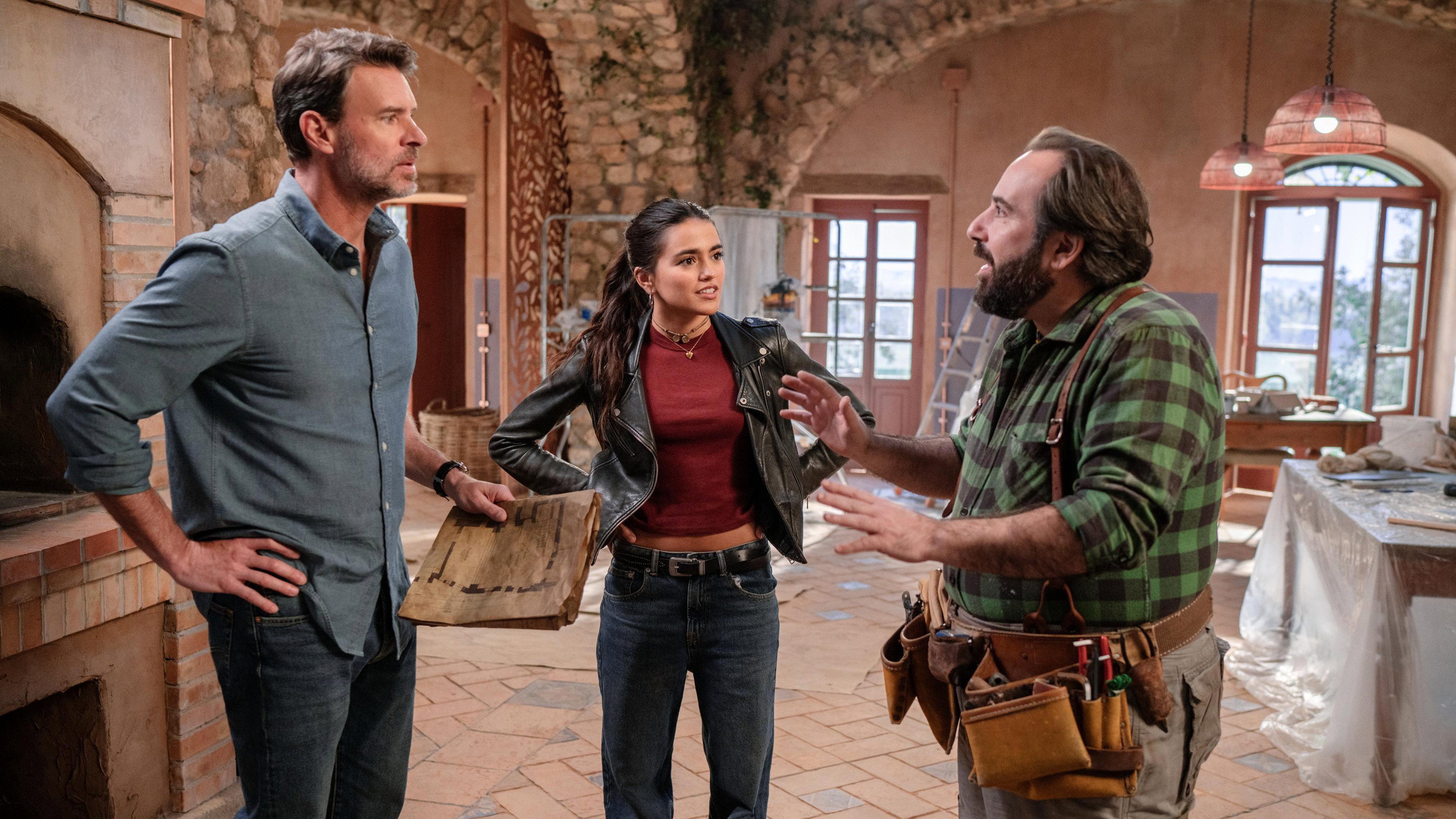
A note on Adria Arjona. It is a mystery how someone so otherworldly beautiful can be so fundamentally silly. There is an unstudied, “yes-and” looseness to her performance style (see also: Hitman). She is a delight to watch. I hope the rumours of her playing Wonder Woman aren’t true. Stoic heroism would be a waste of her talents.
The week’s watching was rounded out by Dead Calm, a nasty little 1989 thriller about a bereaved couple (Sam Neill and Nicole Kidman) who encounter a dangerous stranger (Billy Zane) out at sea (yes, he’s a murderer). It tested my patience.
The film is trapped between its intentions as a psychological thriller and the cultural gravity of the slasher genre. It succeeds as neither. The former would require more mystery around Zane’s character. The latter would require more lambs to the slaughter (as it is, all of Zane’s kills happen off screen). And there is a structural flaw. For much of the film, our two protagonists are separated. Sam Neill must escape a sinking ship; Nicole Kidman must escape a leering Zane. Movie logic demands that the three characters reunite for the final set piece, so the middle sections, though well-executed, are wheel-spinners.
There is, though, a wordless sequence at the beginning of the third act that achieves a poetic harmony of sorts, cross-cutting between our three characters, now separated, as they grapple with their fates against the setting sun. An overwrought choral soundtrack goes into overdrive. Total Cinema, baby.
I need to explore Tarkovsky at some point. Thanks for the nudge 💚 🥃
Love this piece ⭐