

Five Books That Changed How I Think About Movies
My 2025 best-of list
It’s December, which means all Substack writers must share a year-end listicle or else they will be ritualistically disembowelled by a pack of rabid wolves.
I’ve filtered this list through the slightly arbitrary criteria of the books that ‘most changed how I think about movies,’ before breaking that rule for a bonus fiction recommendation (because why not).
I continue to have my finger on the pulse of contemporary culture: the newest book here was published in 2012. But I read them all this year, so they still count. If there’s an overall theme, it’s to get a better grip on craft and the role that constraints play in the creative process. There’s a good reason for this, but we’ll save that for the new year.
Since it’s Christmas, a humble reminder that if you’ve enjoyed Rough Cuts this year, you can give me your money become a generous benefactor of the project:
On to the list.

(1) Death on the Cheap: The Lost B Movies of Film Noir | by Arthur Lyons
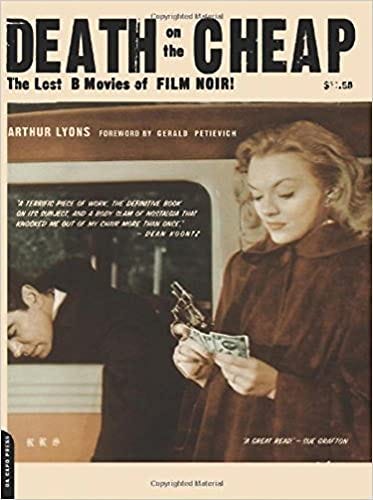
For such a sordid little movement, film noir attracts an awful lot of highfalutin language. Beard-stroking scholars speak of Chiaroscuro and Expressionism and Poetic Realism and Existentialism and various other fancy-sounding terms with rich philosophical histories.
Arthur Lyons takes a different approach. “Many academic critics ignore,” he declares, “that film noir was not just a product of history but also a product of Hollywood, a town less known for its artistic maturity than its penchant for imitation. In Hollywood, necessity is often the mother of invention, especially when wartime economic constraints on movie budgets put severe limits on production values.”
This is a book about necessity. Yes, noir’s characteristically dramatic shadows were indebted to the Expressionist maestros who’d fled Germany in the ‘30s, but it sure didn’t hurt that it was cheaper to light only part of a set than the whole thing. Yes, war-inflected realism contributed to darker, more cynical storylines, but so did the tightening budgets imposed by the War Production Board, which led studios to identify smaller, cheaper, minimally cast productions.
Lyons is a movie lover, not a film scholar, and is happy to tear down some artistic shibboleths in demonstrating that noir was a cheap, easy, accessible product that studios could churn out efficiently. The production realities of the Hollywood system enabled the artistic flourishes of the individuals working within it.
This kind of analysis can come across as inherently unromantic: an attempt to pollute the well of artistic intent and human ingenuity with the nasty business of budgets and quotas. But I find it fascinating and, strangely, way more inspiring. Stories of imperfect people grinding out imperfect solutions under severe constraints feel more human than grand tales of philosophical inspiration. Rather than pretending a system doesn’t exist, I prefer to ask how great work can be produced from within it.
(2) The Way Hollywood Tells It: Story and Style in Modern Movies | by David Bordwell
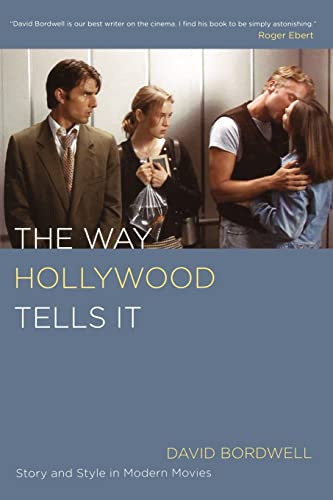
David Bordwell was a freak (complementary). I learn more about cinema from one of his essays than by watching 100 films. No writer makes me feel more inadequate about my own knowledge and understanding of movies than he does. Fun!
The Way Hollywood Tells It makes two central arguments. First, modern American mass-market filmmaking remains deeply indebted to the narrative and stylistic principles established during the silent and studio eras. Second, to the extent there is a “new style,” it accelerates rather than departs from these principles.
We might think that contemporary filmmakers, armed with new technology and a vast archive of predecessors to imitate, enjoy unprecedented freedom. There are more dishes on the menu, and more ways to cook them. Bordwell argues the opposite. Cinema’s history presents “an awesome challenge to any beginner,” he writes. “Not only [has] everything apparently been done, but it has been done superbly.” He calls this the problem of “belatedness.”
Faced with that weight of history, modern filmmakers have responded by turbocharging what already exists, resulting in an adrenalised cocktail of fast cutting, close-ups, restless camera movement, and extreme lens lengths.
Bordwell is too savvy to descend into ‘Good Old Days’ sentimentality. But he demonstrates that, by doubling down on certain techniques, this intensified style has crowded out others, particularly the increasingly rare art of patient long-takes and blocking actors to move in and out of the frame.
You can tell I enjoyed this book, as I got two essays out of it, on the fast-cutting revolution and how modern filmmakers can respond to belatedness. Ideally, you’ll read Bordwell and my essays. But if you only pick one, make sure it’s Bordwell!
If you’re enjoying Rough Cuts, please consider subscribing (it’s free!) or buying me a coffee (not free)…
(3) The BFI Classics Collection
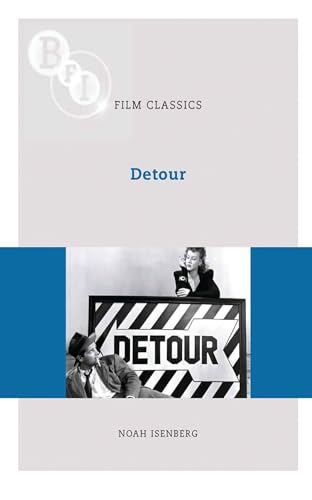
I’m tearing through these for an upcoming project. They’re great. Each tackles a “landmark” film in world cinema, combining biography, production history, thematic analysis, personal reflection, and critical/historical appraisal in under 100 pages, with a different author bringing their perspective to each one. I love the idea of having them all on my bookshelf (with, of course, a corresponding 4K for each film), but alas.
It doesn’t make much sense to recommend a specific title. You’re better off starting with a film you care about and going from there. A couple of personal favourites were Detour (by Noah Isenberg) and Shadows (by Raymond Carney), both of which do excellent work demonstrating how the movies’ financial and production constraints catalysed the filmmakers’ most creatively interesting choices.
(4) Masters of Light: Conversations with Contemporary Cinematographers | by Dennis Schaefer and Larry Salvato
A book-length collection of refreshingly direct, (mostly) unpretentious interviews with fifteen acclaimed cinematographers, many of whom made their bones in the New Hollywood era. I can’t take a good picture of my cat on my iPhone, so these guys are basically magicians to me, with the added bonus that they are willing to publicly explain how they perform their tricks.
My main takeaway: shit, things were SO much harder before digital cinematography. Film stocks, emulsions, lab processing, dailies, etc. It was all so long-winded! But many of the interviewees speak to this painful process as creatively essential. The friction of the process enabled, rather than restricted, the artistry. In this context, the modern trend towards flatter, washed-out lighting starts to feel like an inevitable consequence of losing that friction.
I certainly don’t think the answer is to arbitrarily Make Things Harder or Retvrn. I’m sure many older processes were weighed down by meaningless, time-consuming grind. But if we accept that (1) artistry emerges from friction, (2) not all friction is good friction, and (3) modern tools can eliminate the bad kind, then the real challenge for creatives in the modern era is deciding where in their process to retain friction intentionally. Make the boring stuff easy, but keep the creative stuff hard.
(5) The Story of Film | by Mark Cousins
The betting company Paddy Power recently held a challenge to discover which sporting achievement was hardest: a maximum 147 break in snooker, a hole-in-one in golf, or a nine-dart finish.1
To this list, I would add a film scholar successfully writing a single-volume history of cinema. Many have tried; few have pulled it off. It’s a recklessly hubristic task, one that feels preternaturally doomed to failure. So, kudos to Mark Cousins for this pretty magisterial (and strangely underrated?) tome, which travels from the Lumiere Brothers’ shot of a moving train in 1895 to Mati Diop’s Atlantique in 2019.
The first challenge facing a book like this is deciding on a filter. There are something like one million movies in the world. How can anyone decide what matters? Cousins’ solution is to focus on the films that did things differently, with lasting effect:
“Steven Spielberg sat at home or lay awake or drove through the desert, asking himself the question, how can I do this differently? The best filmmakers have always asked themselves this, on the set in the morning, at night when they can’t sleep, in the bar with their friends, or at film festivals. It is a crucial question for the art of cinema and this book describes how directors have answered it.”
Don’t let the Spielberg reference put you off. While Cousins gives the Welleses, Spielbergs, and Kubricks of the world their due, the book’s strength lies in its geographical reach. It is a truly global piece of history, with attention paid to everything from the Taiwanese New Wave to postcolonial Senegal. It’s a humbling read for anyone but the most ardent cinephile (what, are you really telling me you’ve never seen Yakov Protazonov’s 1925 comedy The Tailor from Torzhok?)
What the book lacks, by Cousin’s own admission, is an account of how production and budgetary realities informed these artistic innovations. At times, the result can feel like an idealised account of how creative breakthroughs ought to be made, rather than how they actually were.
But this isn’t the story Cousins set out to tell. And while the specifics of individual films and innovations can sometimes blur together, his vision of cinema as a living, interconnected system is thrilling, and as good a case I’ve encountered for why we should all be watching far weirder, older, and more geographically diverse movies.
(6) The Getaway | by Jim Thompson
Jim Thompson’s cruel, bourbon-soaked slices of hard-boiled despair aren’t about cinema, but they sure are cinematic. A generation younger than Hammett and Chandler, Thompson added vertiginous psychological depth to the pulpy stories they perfected, giving voice to the brutal, psychotic criminals who stalk the genre’s landscapes. His novels tend to start with clear genre hooks - a robbery gone wrong, a local sheriff fighting for re-election - before descending into the depths of their “protagonists’” psychoses.
I bashed out three of his books in quick succession this year. The Killer Inside Me is the most outright upsetting, Pop 1280 is the funniest (until it isn’t), but The Getaway is the peak. A gritty country-spanning tale of a smooth-talking gentleman criminal and his beloved wife, the book’s third act shapeshifts from grounded realism into a nightmarish world of dream logic and symbolism.
Thanks for all the support in 2025. Lots of cool stuff on the way in the new year. Happy Christmas!
Spoiler: a 147 appears to be the easiest.
I can vouch for 3 of these, along with Jim Thompson, though I've not read The Getaway. Pop 1280 is great, as are the other books I've read by him, so I assume the Getaway is, too.
More to the point, it's nice to know that I'm not the only person on Substack writing about film who relies heavily (in my case perhaps even more heavily) on reading than on watching.
For me it’s comics, the most cinematic of which are the blood and tears soaked pulp adventures, told over decades (both for the characters and the creators), in Criminal by Ed Brubaker and Sean Phillips. (Non-comic readers may know Brubaker as the writer who resurrected unlikely teen sidekick (on the frontlines of WW2!), Bucky Barnes, as the most anti- of MCU heroes, the Winter Soldier.)